
Certified Pre-Owned vs. Used Car: What the Label Actually Means
CPO and used cars look similar on the lot but carry very different warranties and inspection standards. Here is what each label really covers.
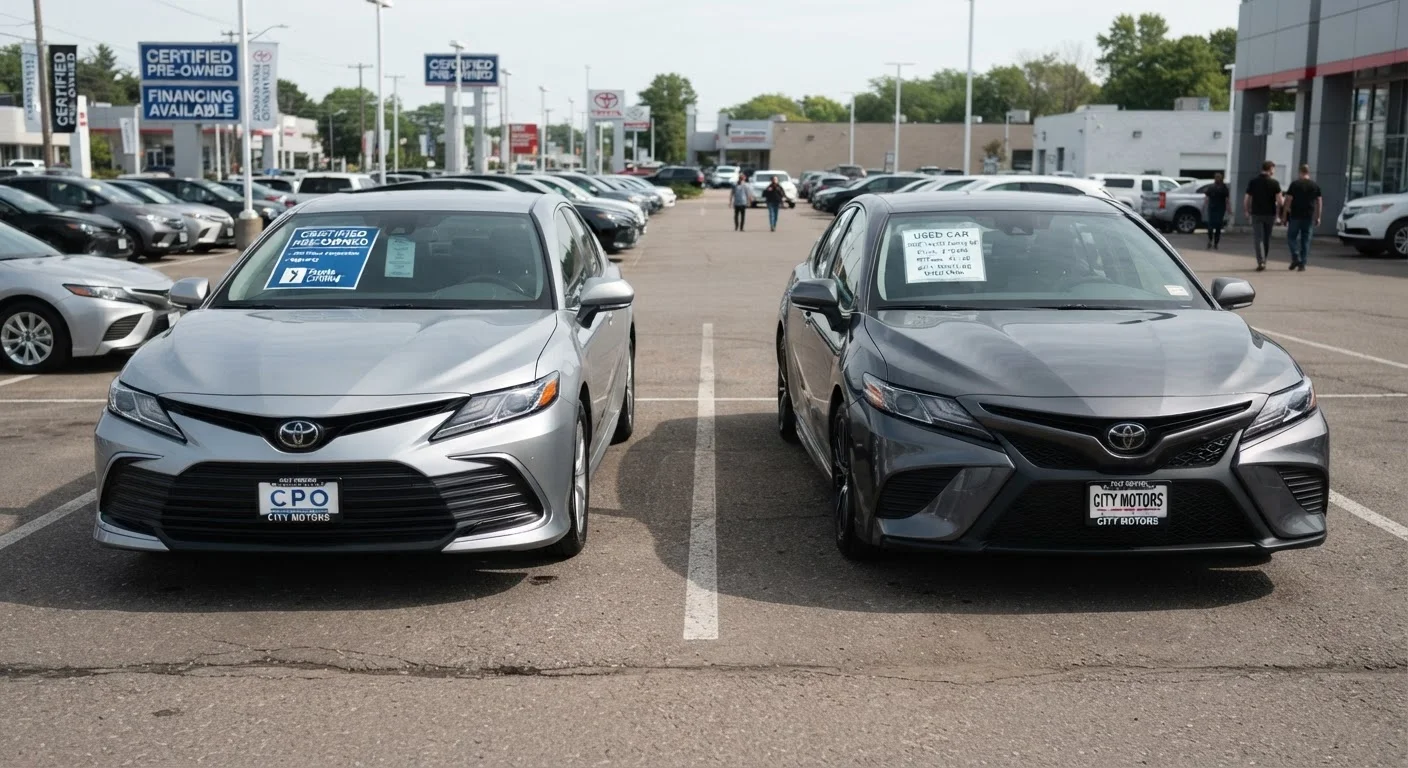
Photo: clearvisionmethod.net editorial
—— In This Article
Key Takeaways
- CPO vehicles must pass a manufacturer-defined inspection and come with an extended limited warranty; standard used cars carry no such requirement.
- CPO programs are run by automakers, not dealerships, so coverage terms vary significantly by brand.
- A standard used car typically costs less upfront, but repair costs after purchase fall entirely on the buyer.
- The CPO price premium can be worth the cost if the warranty covers high-probability repairs on that model.
- Neither label guarantees a trouble-free vehicle; an independent inspection matters for both.
What each label actually means
The word "used" has a legal meaning in auto sales: any vehicle previously titled to a retail owner. "Certified pre-owned" has no single legal definition, which is where confusion starts.
Manufacturer CPO programs, run by automakers such as Toyota, Honda, Ford, and others, set their own inspection checklists, mileage limits, age caps, and warranty terms. A vehicle must pass all of those criteria before the manufacturer allows the dealer to sell it under the CPO label. The warranty that comes with it is backed by the manufacturer, not just the selling dealer.
Dealer-certified programs are different. Some dealerships sell vehicles as "dealer certified" under their own inspection process, without manufacturer backing. These offer fewer and weaker protections than a manufacturer CPO program. When comparing vehicles, confirm which type of certification applies before treating the label as meaningful.
A standard used car carries no inspection requirement, no warranty from the seller (unless the dealer chooses to offer one), and no third-party backing. The buyer takes the vehicle in whatever condition it is in at the time of sale, subject only to any representations the seller makes in writing.
Several widely repeated beliefs about used cars do not hold up when you look at what the labels actually guarantee.
How the costs compare
| Criterion | Certified Pre-Owned (CPO) | Standard Used Car |
|---|---|---|
| Inspection requirement | Manufacturer-defined checklist required | No required standard |
| Warranty | Manufacturer-backed extended warranty included | None unless dealer chooses to offer one |
| Purchase price | Higher (premium for certification) | Lower upfront |
| Mileage and age limits | Set by manufacturer (typically under 6 years, 80k miles) | No limits; any age or mileage |
| Roadside assistance | Included in most programs | Not included |
| Vehicle history report | Usually provided | Varies by seller |
| Independent inspection value | Still useful; confirms CPO claims | Strongly recommended before purchase |
The price gap between a CPO vehicle and a comparable standard used car typically runs from a few hundred to several thousand dollars, depending on the model and age. That premium pays for two things: the inspection itself and the warranty coverage period.
Whether the premium is worth it depends on the specific warranty terms. Read the CPO contract carefully. Look at what is covered, what the deductible is per claim, how many miles the powertrain coverage runs, and whether wear items such as brakes and tires are excluded. Most manufacturer CPO warranties exclude routine maintenance and wear items, so budget for those separately.
For a standard used car, the total cost calculation has to include a realistic estimate of near-term repairs. A pre-purchase inspection by an independent mechanic, which generally costs between $100 and $200, can surface known problems before you commit. That single step changes the risk profile of a standard used purchase considerably. See what to inspect before signing off on a used car for a detailed checklist.
Warranty terms: what CPO covers and what it does not
Most manufacturer CPO programs include two layers of warranty. The first is the remainder of the original new-car warranty if it has not expired. The second is an additional extended limited warranty, often covering the powertrain for a set number of years or miles beyond the original coverage.
Exclusions are common and worth reading carefully. Items typically not covered include:
- Brake pads, rotors, and other friction components
- Tires
- Filters, fluids, and belts
- Cosmetic items such as upholstery or trim
- Damage from accidents or misuse
Many CPO programs also include roadside assistance and, in some cases, a short return window. Those benefits vary by brand and should be confirmed in writing before purchase.
A standard used car sold "as-is" comes with no warranty coverage at all. Some dealers offer limited powertrain warranties on used cars as a selling point, but those are dealer-specific and the terms vary widely. An aftermarket vehicle service contract (sometimes called an extended warranty) can be purchased separately, though the coverage terms and claims processes differ significantly across providers.
The inspection gap
CPO inspections typically cover 100 to 200 points depending on the manufacturer, checking mechanical, electrical, and safety systems. Vehicles that fail are either reconditioned to meet the standard or removed from the CPO pool. That process adds time and cost for the dealer, which is part of why CPO vehicles carry a premium.
A standard used car may have been inspected by the dealer for obvious problems, or it may not have been inspected at all. There is no required disclosure of the inspection scope. This is why an independent pre-purchase inspection carries real weight for any used car purchase, CPO or not. A CPO inspection is performed by the selling dealer's technicians; an independent inspection is done by a mechanic with no financial stake in the sale.
Inspection scope and warranty terms are the two practical differences between CPO and standard used. Everything else, including price negotiation, financing options, and vehicle history reports, works roughly the same way for both.

Autos Editorial Team
Autos Editorial Team is the collective byline for our editorial team and contributor network. Articles published under this byline or an editorial pen name are researched, written, and reviewed according to our editorial standards for clarity, consistency, and independence before publication.
View author profile