
Understanding R-Value: What Attic Insulation Numbers Actually Mean
R-value labels appear on every insulation product, but what do they mean for your home's comfort and energy use? This explainer breaks it down clearly.
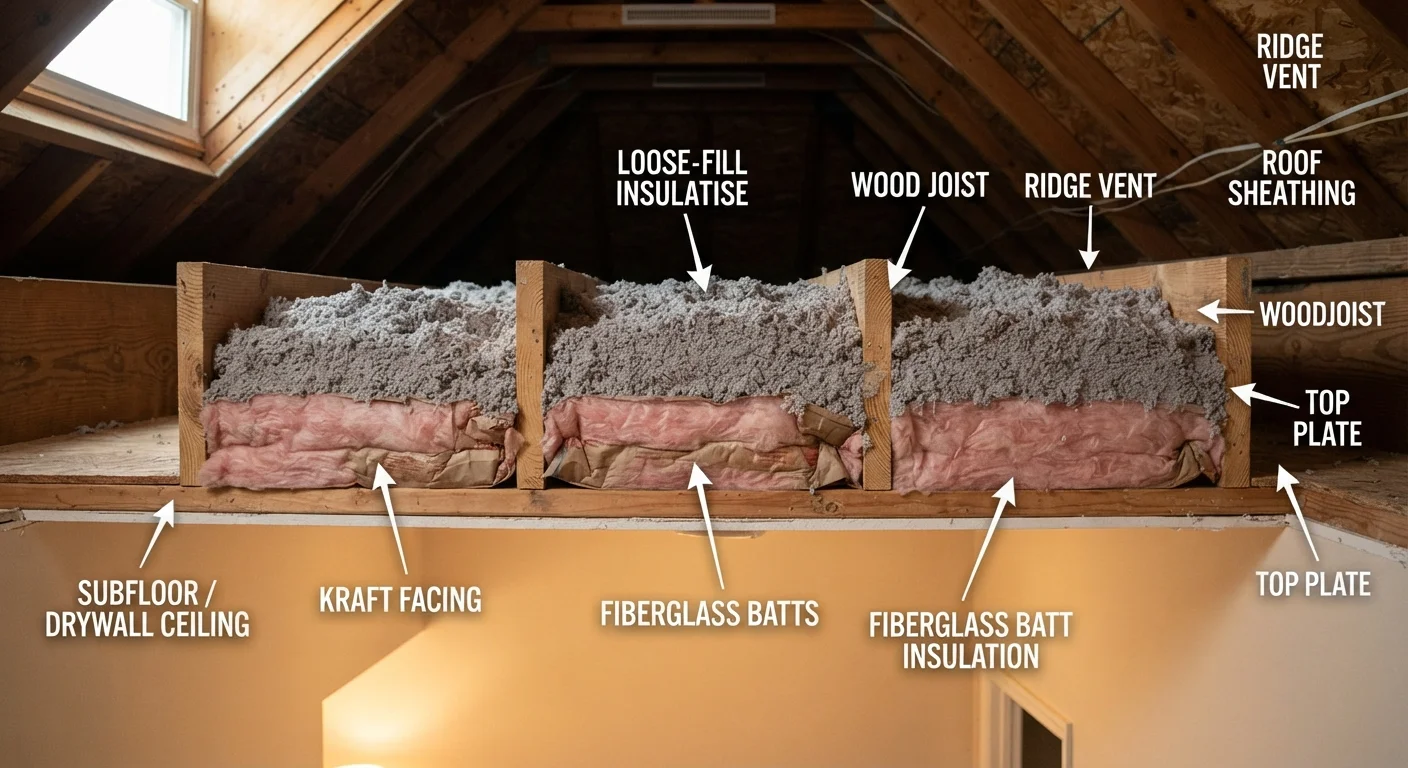
Photo: clearvisionmethod.net editorial
—— In This Article
Key Takeaways
- Higher R-values mean better resistance to heat flow, which affects comfort and energy bills.
- Attic insulation needs vary by U.S. climate zone, with colder regions requiring higher R-values.
- Different insulation materials reach the same R-value at different thicknesses.
- R-values are additive, so existing insulation can be supplemented rather than replaced.
- Air sealing before adding insulation produces better results than insulation alone.
Why the number on the bag matters
When you buy insulation, the R-value printed on the package is the single most useful number for comparing products. It tells you how hard that material works to slow heat movement. A bag rated R-3.7 per inch lets roughly twice as much heat through as one rated R-6.5 per inch at the same thickness.
Heat always moves from warm areas to cool ones. In winter, that means heat generated inside your home tries to escape through the ceiling into the attic. In summer, the flow reverses, and hot attic air pushes warmth down into your living space. Insulation slows both directions of that movement. The attic is the most important place to address because heat rises, and an under-insulated attic ceiling is one of the most common sources of energy loss in American homes.
The R-value system is straightforward: it is a single number you can use to compare a roll of fiberglass, a bag of cellulose, and a board of rigid foam. Higher always means more resistance, regardless of material.
How different materials reach the same R-value
Not all insulation materials need the same thickness to hit a target R-value. That matters when attic space or joist depth limits how much you can install.
- Fiberglass batts run about R-2.9 to R-3.8 per inch, depending on density.
- Blown cellulose sits around R-3.2 to R-3.8 per inch when settled.
- Mineral wool batts reach roughly R-3.7 to R-4.2 per inch.
- Closed-cell spray foam delivers R-6.0 to R-6.5 per inch, making it useful where space is tight.
- Rigid foam boards vary from R-3.8 (expanded polystyrene) to R-6.5 (polyisocyanurate) per inch.
To reach R-49 with standard fiberglass batts, you need about 14 to 15 inches of material. The same R-value with closed-cell spray foam would take roughly 8 inches. The spray foam costs considerably more per square foot, so the tradeoff is space savings versus material cost.
Measure your existing insulation first
Before buying anything, use a ruler to measure how many inches of insulation are already in your attic. Multiply that depth by the material's R-value per inch to estimate what you have. This tells you exactly how much more you need to reach the recommended level for your climate zone, so you do not overbuy or underbuy.
Climate zones and recommended levels
The U.S. Department of Energy divides the country into eight climate zones and publishes recommended R-values for each. Attics get the highest recommendations because they cover the largest surface area and experience the greatest temperature swings.
Zone 1 and 2 (Florida, southern Texas, Hawaii): R-30 to R-49. Zone 3 (most of the Southeast and southern California): R-30 to R-60. Zones 4 through 8 (mid-Atlantic through the northern plains and Alaska): R-49 to R-60. Many homes built before 1980 fall well short of even the lower end of these ranges, which is why attic insulation upgrades often deliver noticeable results.
Local building codes sometimes set their own minimums, and these can differ from the DOE guidance. Check with your local building department before starting any work, particularly if you plan to pull a permit.
90%
U.S. homes that are under-insulated
The North American Insulation Manufacturers Association has estimated that approximately 90 percent of U.S. homes do not meet current energy code insulation recommendations.
R-49 to R-60
Recommended attic R-value for most northern U.S. climates
According to the U.S. Department of Energy's zone recommendations, attics in cold climates require the highest insulation levels of any area in the home.
Air sealing: the step that makes R-value work
R-value measures resistance to conductive and convective heat flow through a material, but insulation cannot stop air from moving through gaps around light fixtures, plumbing penetrations, and the tops of interior walls. Air carries heat with it, bypassing the insulation entirely.
Before adding insulation to an attic, sealing those gaps with caulk or spray foam makes a real difference. A 1-square-inch hole in the ceiling can allow more heat transfer than several square feet of uninsulated drywall. Common leakage points include recessed light cans, the attic hatch, and gaps where pipes or wires pass through the ceiling plate.
Addressing air leaks before laying down more insulation is not optional for best results. Adding R-30 of new insulation over an unsealed attic floor will still leave you with drafts and high bills. Seal first, then insulate.
Permits and safety considerations
Adding blown-in insulation or spray foam may require a permit in some jurisdictions. Spray foam work, particularly with two-component kits, involves chemical exposure and typically should be done by a licensed contractor. Recessed light fixtures in older homes may also require special sealed covers before insulation can be placed over them. Check your local codes and consult a professional if you are unsure.
Frequently Asked Questions

Home & Garden Editorial Team
Home & Garden Editorial Team is the collective byline for our editorial team and contributor network. Articles published under this byline or an editorial pen name are researched, written, and reviewed according to our editorial standards for clarity, consistency, and independence before publication.
View author profile