
DIY Deck Repairs: Knowing Which Jobs You Can Safely Handle Yourself
Replacing a board or tightening fasteners is manageable for most homeowners. Learn where DIY deck work ends and a licensed contractor becomes necessary.
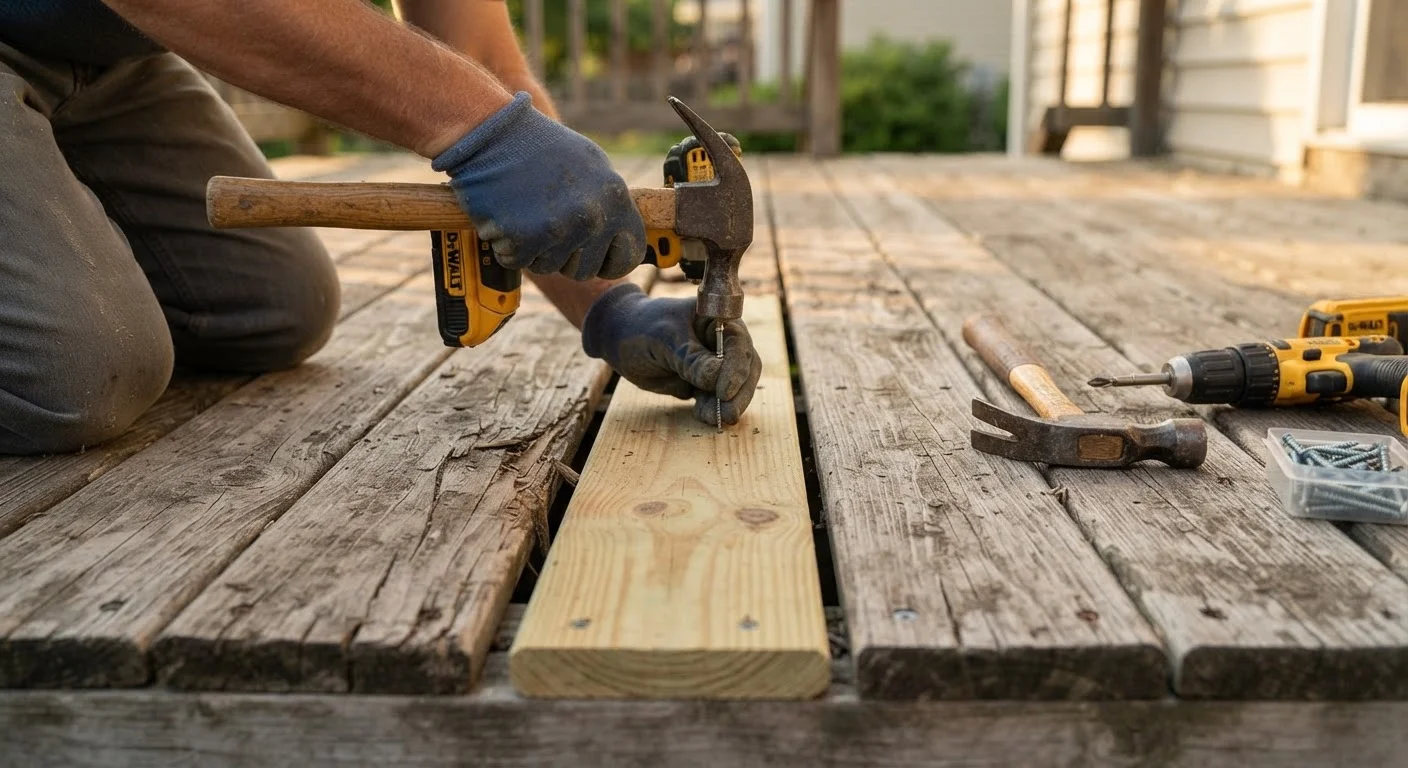
Photo: clearvisionmethod.net editorial
—— In This Article
Key Takeaways
- Replacing individual boards, tightening fasteners, and sealing wood are safe DIY tasks for most homeowners.
- Structural repairs involving posts, beams, or ledger boards typically require a licensed contractor.
- Always check local permit requirements before starting any deck repair project.
- Inspect your deck each spring for rot, loose hardware, and splintered boards before the season begins.
- Work safely by inspecting from below before walking on a deck that feels soft or unstable.
What makes a deck repair DIY-friendly vs. contractor territory
The line between a manageable weekend project and work that requires a licensed professional comes down to one question: does this repair touch load-bearing structure? Surface boards, fasteners, sealers, and railings are generally safe territory for a careful homeowner. Posts, beams, the ledger board (the board that connects the deck to the house framing), and footings are structural. Mistakes there can cause a deck to collapse.
Before picking up any tools, inspect the deck from below if you can safely access the underside. Look for discolored wood, insect damage, and any hardware that appears corroded or missing. What you find below the surface is often more telling than what you see on top.
Permits and local codes matter
Many municipalities require a permit for structural deck repairs, even if you are doing the work yourself. Requirements vary widely by county and city. Check with your local building department before starting any project that touches framing, posts, or the ledger board. Unpermitted structural work can complicate home sales and may void homeowner's insurance coverage.
Repairs most homeowners can handle
The following tasks fall within reach for a homeowner who is comfortable with basic carpentry tools and can follow safety precautions.
Walk the entire deck surface before starting any repair work
A visual and physical inspection tells you whether the problem is isolated or a sign of something larger. Bouncy boards, soft spots underfoot, or discoloration often indicate rot that has spread beyond what is visible from the top.
Replace only individual boards when rot or damage is clearly isolated
Swapping out a single board does not affect the structural framing and is one of the most manageable deck repairs a homeowner can do. Using the same lumber species and thickness as the original keeps the surface level and consistent.
Tighten or replace loose fasteners across the whole deck surface annually
Screws and nails work loose as wood expands and contracts with seasonal temperature changes. Loose fasteners are a trip hazard and, over time, allow boards to shift and gap unevenly.
Apply a water-repellent sealer or stain every two to three years
Bare, weathered wood absorbs moisture, which accelerates rot and causes boards to crack and splinter. A penetrating sealer extends board life and reduces how often you need to replace individual pieces.
Stop and call a licensed contractor when you find rot in posts, beams, or the ledger board
These components carry the deck's load and connect it to the house. Rot or damage here is a safety issue, not a cosmetic one. An improperly repaired post or ledger board can fail without warning.
Repair or replace railing sections that wobble or have broken balusters
Railings are a fall-prevention system. A railing that moves when you press it sideways does not meet its basic function and is a safety hazard, particularly for children and older adults.
Quick checks you can do right now
You do not need to schedule a full repair day to start improving your deck's condition. These actions take under 30 minutes and can catch problems before they become expensive.
When to step back and hire a professional
Certain conditions should stop DIY work immediately. If your deck has any of the following, contact a licensed contractor before walking on it again:
- Visible rot or significant movement in posts or beams
- A ledger board that shows rot, rust staining, or separation from the house
- Footings that have heaved, cracked, or shifted out of position
- A deck surface that feels soft or bouncy over a wide area rather than at one board
Structural deck failures can happen suddenly and without obvious warning beforehand. The cost of a professional assessment is small compared to injury risk or a complete rebuild.
This article is for general informational purposes only. Always verify local building codes and permit requirements with your municipal building department before starting repair work. For structural or hazardous repairs, consult a licensed contractor.

Home & Garden Editorial Team
Home & Garden Editorial Team is the collective byline for our editorial team and contributor network. Articles published under this byline or an editorial pen name are researched, written, and reviewed according to our editorial standards for clarity, consistency, and independence before publication.
View author profile