
Nutrition Myths That Keep Families From Eating Well
Evidence-based corrections to widespread food and diet misconceptions, helping families make clearer choices without the confusion of conflicting headlines.
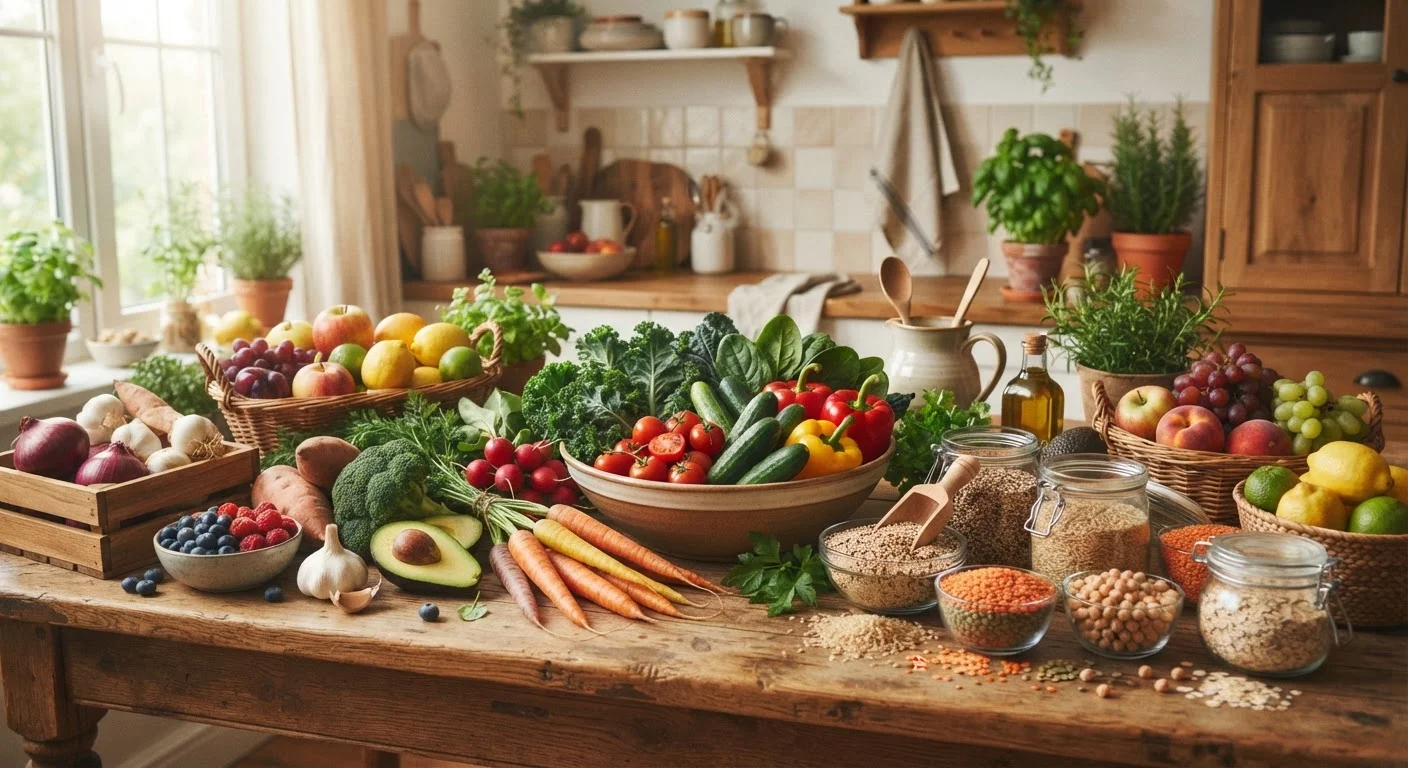
Photo: clearvisionmethod.net editorial
—— In This Article
Key Takeaways
- Fresh produce is not always more nutritious than frozen or canned alternatives.
- Dietary fat is not inherently harmful; the type of fat matters more than the total amount.
- Carbohydrates are not the enemy; food quality within each category shapes health outcomes.
- Organic labels do not automatically make food safer or more nutritious for most families.
- Protein needs can be met affordably through plant-based sources, not only meat.
Why nutrition myths spread so easily
Conflicting headlines about food are common, partly because nutrition science involves long-term population studies that are hard to conduct cleanly, and partly because findings from small studies get amplified before they are replicated. A study showing one result in a specific group often does not apply universally, but it travels fast online. The result is that many families end up avoiding nutritious, affordable foods based on information that was overstated or simply wrong.
Building a clearer picture of food and health does not require a nutrition degree. It does require setting aside a few persistent misconceptions that have taken hold in mainstream conversation. The myth-and-fact pairs below cover some of the most common ones, grounded in guidance from established nutrition and public health authorities.
Myth
Fresh fruits and vegetables are always more nutritious than frozen or canned ones.
Fact
Frozen and canned produce often retain comparable or even higher nutrient levels than fresh produce that has spent days in transit and storage.
Fresh produce can lose water-soluble vitamins like vitamin C and folate during the days between harvest and when it reaches your table. Frozen vegetables are typically blanched and frozen within hours of harvest, locking in much of their nutritional content. Canned vegetables follow a similar principle, though sodium-added varieties are worth rinsing before use. The U.S. Department of Agriculture acknowledges that frozen and canned options count toward daily vegetable and fruit recommendations. For families watching a budget, frozen and canned produce is a practical and nutritionally sound choice.
Myth
Eating fat makes you gain weight and damages your heart.
Fact
Dietary fat is a necessary nutrient; the type of fat consumed matters far more than fat intake alone.
Unsaturated fats found in foods like avocados, nuts, seeds, and olive oil are associated with better cardiovascular outcomes in nutrition research. Saturated fats, found in higher amounts in red meat and full-fat dairy, are worth moderating, and trans fats (partially hydrogenated oils) are the category most consistently linked to cardiovascular harm. The Dietary Guidelines for Americans advise limiting saturated fat and avoiding artificial trans fat, not eliminating dietary fat altogether. Fat also helps the body absorb fat-soluble vitamins A, D, E, and K, making it nutritionally essential for both adults and children.
Myth
Carbohydrates cause weight gain and should be avoided or severely restricted.
Fact
Carbohydrates are the body's primary energy source; the quality and quantity of carbohydrates consumed is what shapes health outcomes.
Whole grains, legumes, fruits, and vegetables are carbohydrate-containing foods consistently associated with positive health outcomes in large population studies. Refined carbohydrates, such as white bread, sugary beverages, and processed snacks, provide calories with little fiber or micronutrient value and are the category most associated with blood sugar spikes and overconsumption. Swapping refined grains for whole-grain versions and increasing fiber intake are practical changes that most nutrition professionals support. Eliminating all carbohydrates is unnecessarily restrictive and makes family meals harder to plan affordably.
Myth
Organic food is significantly safer and more nutritious than conventionally grown food.
Fact
Research has not consistently shown that organic produce is meaningfully more nutritious than conventional produce for the general population.
A comprehensive review published in the Annals of Internal Medicine found limited evidence that organic foods lead to better health outcomes compared to conventional foods. Organic farming prohibits synthetic pesticides, but pesticide residues on conventionally grown produce sold in the U.S. are regulated by the Environmental Protection Agency and typically fall well below safety thresholds. For families with tight budgets, prioritizing overall fruit and vegetable intake, whether organic or conventional, supports better nutrition than choosing fewer organic items due to cost. Washing produce thoroughly under running water reduces surface residues regardless of how it was grown.
Myth
You can only get adequate protein from meat, poultry, and dairy.
Fact
Plant-based foods including legumes, tofu, tempeh, edamame, and whole grains supply substantial protein and often cost less per gram than animal sources.
Beans, lentils, chickpeas, and peanuts are protein-dense and among the most affordable staples available. Combining a variety of plant proteins across the day provides all essential amino acids for most healthy adults and children. The Academy of Nutrition and Dietetics states that well-planned plant-based diets can meet protein needs at all stages of life. Families do not need to eliminate animal products to benefit from incorporating more plant proteins; even partial substitution can reduce grocery spending while maintaining adequate nutrition. Parents with concerns about protein intake for growing children or family members with specific health conditions should speak with a registered dietitian.
Practical steps for cutting through the noise
Knowing that a myth is false is useful. Knowing what to do instead is more useful. A few habits help families make nutrition decisions with less confusion.
Read past the headline. Nutrition stories often compress nuanced findings into sharp claims. If a headline says a food is harmful or a cure, the actual research behind it is usually more conditional. Checking whether a finding comes from a small, short-term study or a large, long-term one puts it in perspective.
Focus on food patterns rather than single foods. Nutrition professionals generally agree that the overall pattern of eating matters more than whether any one food is present or absent. A diet with plenty of vegetables, legumes, whole grains, and a variety of protein sources is consistent with most established dietary guidance, regardless of whether it includes occasional processed foods.
Use cost as a useful filter. Many of the foods with strong evidence behind them, such as dried beans, lentils, oats, frozen spinach, and canned fish, are also among the most affordable items in any grocery store. Expensive supplements and specialty products rarely offer benefits that basic whole foods do not. For more on building healthy habits within a budget, see our guide to family wellness without overspending.
This article is general information, not medical advice
The content here is intended to help families understand common nutrition misconceptions and make more informed food choices. It does not replace guidance from a registered dietitian or physician. For questions about a specific health condition, dietary restriction, or child nutrition needs, consult a qualified healthcare professional.
When nutrition questions become more specific, such as managing a chronic condition, feeding a child with a food allergy, or supporting a pregnancy, a registered dietitian is the right resource. General nutrition information is a starting point, not a substitute for personalized guidance.

Health Editorial Team
Health Editorial Team is the collective byline for our editorial team and contributor network. Articles published under this byline or an editorial pen name are researched, written, and reviewed according to our editorial standards for clarity, consistency, and independence before publication.
View author profile