
What Generic Medications Are and How They Compare to Brand-Name Drugs
Explore how generic drugs are regulated, how they differ from brand-name versions, and what families should discuss with their pharmacist or doctor.
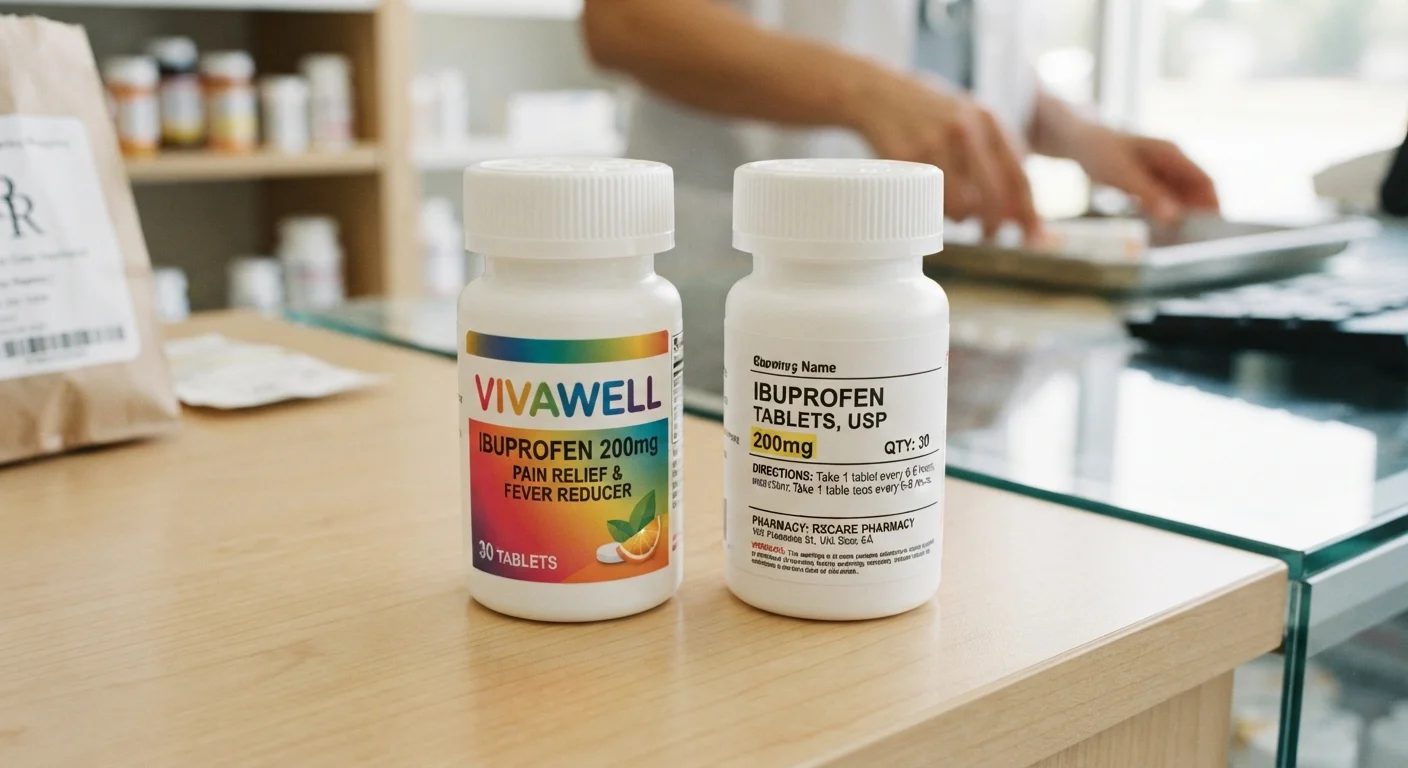
Photo: clearvisionmethod.net editorial
—— In This Article
Key Takeaways
- The FDA requires generics to have the same active ingredient, dosage form, strength, and route of administration as their brand-name counterparts.
- Generic drugs cost 80 to 85 percent less on average than brand-name equivalents, according to the FDA.
- Inactive ingredients can differ between generic and brand-name versions, which matters for some patients with specific allergies or sensitivities.
- A pharmacist can explain bioequivalence standards and help you understand what substitution means for your prescription.
- Always consult a qualified healthcare provider before switching between a brand-name and generic medication.
What makes a drug generic
A generic medication is a drug product that contains the same active ingredient, in the same amount and dosage form, administered by the same route as the original brand-name drug. The U.S. Food and Drug Administration (FDA) requires manufacturers to demonstrate bioequivalence before approving any generic. Bioequivalence means the generic delivers the active ingredient to the bloodstream at a rate and extent that is not meaningfully different from the brand-name version.
Patent law is what creates brand-name drugs in the first place. A pharmaceutical company that develops a new drug receives a patent, which grants market exclusivity for a period of years. During that window, no competitor can sell the same compound. Once the patent expires, other manufacturers may apply to the FDA for approval to produce and sell the generic version.
The FDA's Office of Generic Drugs reviews each application, which includes data on bioequivalence testing, manufacturing quality, and labeling accuracy. Generics are not simply copies made without oversight; they go through a formal regulatory review process before reaching pharmacy shelves.
How they compare side by side
The active ingredient is identical between a brand-name drug and its approved generic. What can differ are inactive ingredients, sometimes called excipients. These include fillers, binders, colorings, coatings, and preservatives. Manufacturers use excipients to give a tablet its shape or to protect the active ingredient during digestion. Because excipients are not the therapeutic agent, the FDA does not require them to match.
For most people, this difference is inconsequential. For a small number of patients, however, an inactive ingredient can trigger an allergic reaction or affect tolerability. Patients with documented sensitivities should review the inactive ingredient list of any specific generic product with their pharmacist before switching.
| Criterion | Brand-name medications | Generic medications |
|---|---|---|
| Active ingredient | Original compound | Identical compound, same dose |
| FDA approval required | Yes, via New Drug Application | Yes, via Abbreviated New Drug Application |
| Bioequivalence standard | Established by original trials | Must meet FDA bioequivalence criteria |
| Inactive ingredients | Proprietary formulation | May differ; varies by manufacturer |
| Average cost | Higher; often significantly | 80-85% lower on average (FDA data) |
| Market entry timing | Available during patent period | Available after patent expiration |
| Appearance | Distinctive; trademarked design | Must differ from brand visually |
Price is where the contrast is most pronounced. The FDA estimates that generic drugs save U.S. consumers and the health care system hundreds of billions of dollars each year. For families paying out of pocket or managing high-deductible insurance plans, that difference is concrete and immediate.
Narrow-therapeutic-index drugs: a category worth knowing
Most medications have a wide enough dosing range that small differences in absorption between products do not affect outcomes. A separate category, called narrow-therapeutic-index (NTI) drugs, requires more precision. These are medications where a small change in blood concentration can cause either treatment failure or toxicity. Examples of drug categories in this group include certain anticoagulants, antiepileptics, and thyroid hormone replacements.
Prescribers and pharmacists apply extra scrutiny when a patient takes an NTI drug. Some states require pharmacists to notify the prescriber before substituting an NTI generic, and some prescribers write "dispense as written" on the prescription to prevent automatic substitution. This is a clinical conversation, not a blanket reason to avoid generics across the board.
Narrow-therapeutic-index drugs and monitoring
If you take a medication in the narrow-therapeutic-index category, do not change between formulations without first speaking to your prescriber or pharmacist. Routine blood level monitoring may be appropriate after any switch. Your healthcare team can help you understand whether additional lab work or follow-up visits are warranted.
This article is general health information, not medical advice. Speak with a licensed healthcare provider or pharmacist about decisions that affect your specific prescriptions and health conditions.
What to ask your pharmacist and doctor
Pharmacists are trained to counsel patients on drug substitutions and are an underused resource for families trying to manage prescription costs. Before switching or accepting a generic substitution, consider asking these questions during your next pickup or appointment.
- Is there an FDA-approved generic available for this prescription?
- Does this drug fall into a narrow-therapeutic-index category that warrants extra monitoring?
- Are the inactive ingredients in this specific generic formulation safe given my known allergies?
- Will my insurance formulary cover the generic, and at what tier?
- If I switch from brand to generic (or vice versa), what signs should prompt me to contact you?
Insurance formularies, which list the drugs a plan covers and at what cost-sharing level, often place generics on lower tiers with smaller copayments. Checking whether a generic is on your plan's formulary before filling a new prescription can prevent unexpected costs.
80-85%
Average cost savings with generics
The FDA reports that generic drugs cost 80 to 85 percent less on average than their brand-name counterparts.
90%
Share of U.S. prescriptions filled as generics
According to the FDA, generics account for roughly 90 percent of prescriptions dispensed in the United States.
$313B+
Estimated annual U.S. savings from generics
The Association for Accessible Medicines has reported that generic and biosimilar medicines saved the U.S. health care system over $313 billion in a single year.

Health Editorial Team
Health Editorial Team is the collective byline for our editorial team and contributor network. Articles published under this byline or an editorial pen name are researched, written, and reviewed according to our editorial standards for clarity, consistency, and independence before publication.
View author profile